5 Car Parts You Should Always Buy Used
Used auto parts aren't a compromise. For five specific components,...
There’s a stubborn myth that used auto parts are a compromise, the thing you settle for when the budget won’t stretch to new. For a specific handful of components that reasoning runs exactly backward. On these parts, a used original-equipment piece pulled from a low-mileage donor isn’t the cheap option that happens to work well enough. It’s the correct option. Reaching for new or aftermarket instead means paying more for something that fits worse or performs identically.
The trick is knowing which parts fall into that category, because the advice doesn’t apply across the board. Nobody should buy used brake pads. A used timing belt is a terrible idea. But for the five parts below, the case for used is strong enough that going new first is usually the mistake. Here’s the list, the reason each one belongs on it, and what to verify before you buy.
The strongest argument isn’t price, although the savings are substantial. It’s that a used original-equipment part is the exact component your vehicle rolled off the assembly line with, and for a large category of parts that factory fit and finish is something aftermarket reproductions never quite replicate. A used OEM part is genuine Mercedes, genuine Toyota, genuine Ford, at a fraction of dealer cost, whereas an aftermarket part represents a third-party manufacturer’s approximation of that original engineering.
Used parts also represent the environmentally responsible choice, because reusing an existing component eliminates all the raw material extraction and manufacturing energy that producing a new one consumes, which constitutes the entire founding premise of automotive recycling and a core reason the EPA promotes recycling and reuse. The financial savings and the sustainability argument point in the same direction, and on the five parts below, so does the fundamental question of quality.
Body panels lead the list because this is where used OEM wins most decisively. A factory door, fender, or hood is stamped from correct-gauge steel or aluminum on the same tooling that built your car. It hangs on the original hinges. It aligns with the panels around it. It holds paint the way the factory intended. Aftermarket body panels are notorious for precisely the opposite failings: gaps that refuse to close evenly, mounting holes that don’t line up, and metal thin enough to oil-can under light hand pressure.
The savings run deep because body panels are among the most expensive parts to buy new, and they’re also the ones most commonly needed after a collision. A used door in your car’s factory color can arrive already painted. That spares you a bodyshop respray on top of the part cost.
What to check: confirm the panel matches your specific year range, since body styling frequently changes mid-generation, and pull the manufacturer paint code from your door-jamb sticker if you want a color match. Photographs of the actual panel matter more here than anywhere else. A dent or a deep scratch changes the value entirely, and a reputable yard photographs each panel off the vehicle before it goes up for sale.
A tested used OEM engine ranks among the smartest used purchases available, and for most out-of-warranty vehicles it beats both a new crate engine and a machine shop rebuild. A complete used assembly already ran as a balanced, broken-in unit in another vehicle. That eliminates the reassembly risk inherent in a rebuild and the considerable expense inherent in new.
The economics are difficult to argue against. A new engine from a dealer is frequently worth more than the vehicle it’s destined for once that vehicle is a few years old, and a custom rebuild bills by the labor hour for weeks on end. A tested used engine is a fixed, known price that installs in days. If your car is throwing a rod or burning oil badly enough to require internal work, this is the route that keeps the repair economically rational. The failure modes behind that decision, from spun bearings to a cracked block, are covered in our guide to diagnosing engine knock.
What to check: match the engine by year, make, model, and the specific engine code, because a single model year frequently offered more than one powerplant, and the incorrect assembly won’t bolt up or communicate correctly with your vehicle’s electronic control systems. Ask for the donor’s accumulated mileage and confirm the engine underwent testing before it was listed. Verifying the VIN interchange before purchase is what distinguishes a clean installation from a costly return.
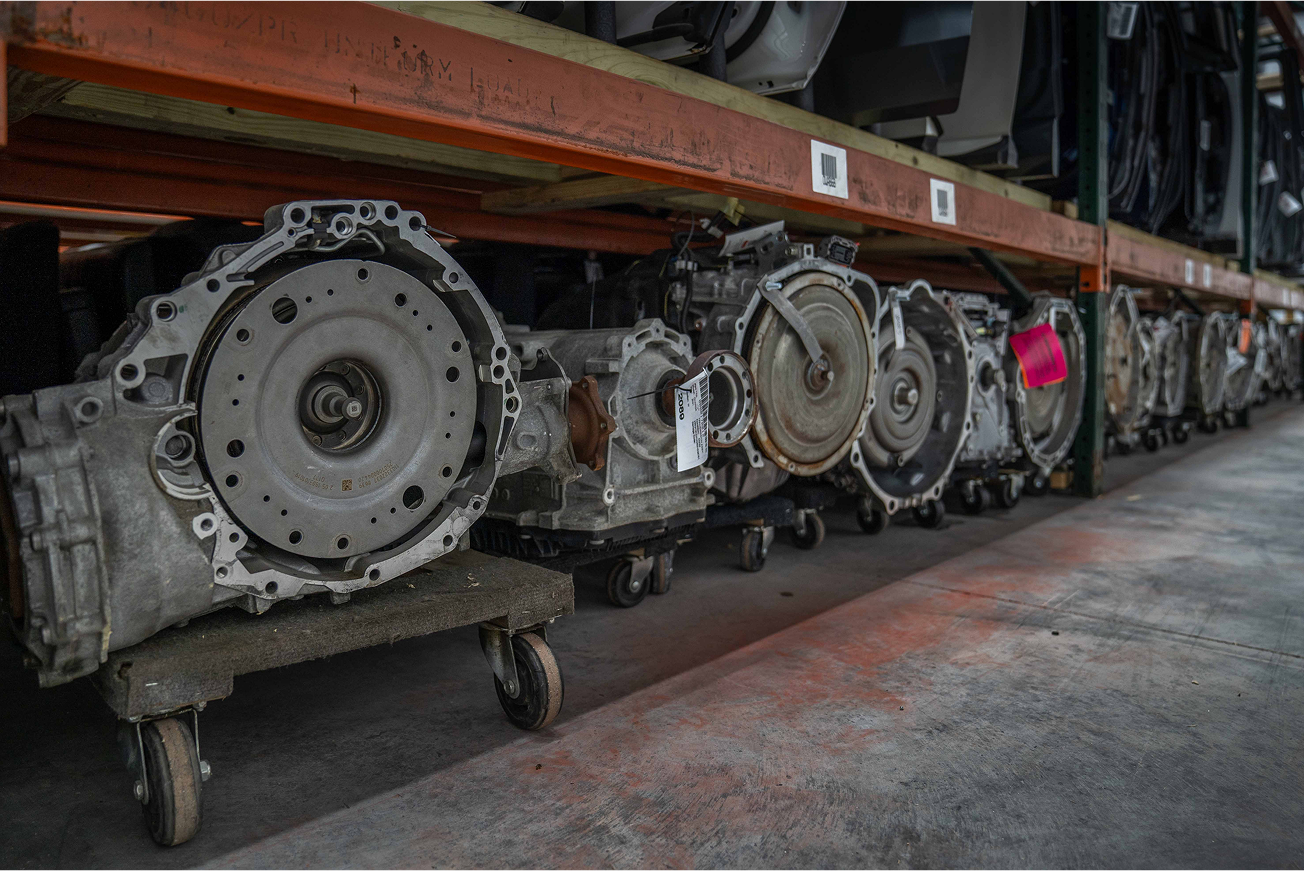
Transmissions follow the same reasoning as engines and earn their place on any list of car parts you should always buy used. Rebuilding an automatic is specialist work. Its quality varies widely depending on who performs it. A new unit from the dealer carries a price that rarely pencils out on an older vehicle. A tested used transmission from a low-mileage donor sidesteps both of those problems at once.
A used automatic or manual that came out of a running vehicle is a complete, factory-assembled unit with all its internal tolerances intact. For the cost of a rebuild’s labor alone, you can frequently buy a tested used assembly outright and still have money left over. The value is strongest on the transmissions that are expensive or genuinely difficult to rebuild well, which describes most modern automatics.
What to check: transmissions are highly specific to drivetrain and engine pairing, so match the complete vehicle configuration rather than merely the model designation. Confirm whether your vehicle is front-wheel, rear-wheel, or all-wheel drive, and match the engine the transmission was originally mated to. Ask about accumulated mileage and whether the unit underwent testing, and verify that the fluid on a used automatic appears clean rather than burnt.
Wheels come close to a no-downside used purchase, which is exactly why they earn a spot here. A steel or alloy wheel that isn’t bent or cracked performs identically whether it has one mile on it or fifty thousand. Factory wheels are expensive enough new that the used savings become dramatic. This is the category where the whole used-versus-new debate is least complicated.
Buying used is also frequently the only sensible route to replacing a single damaged factory wheel, or to assembling a complete matching set in an original finish, particularly on older or discontinued vehicles where factory wheels are no longer manufactured. Drivers shopping for a dedicated set of winter wheels purchase used steel rims for precisely this reason.
What to check: confirm the wheel diameter, width, bolt pattern, and offset all correspond to your vehicle’s specification, because a wheel that bolts on with the wrong offset generates handling and clearance problems. Ask the seller to confirm the wheel is straight and free of cracks, since a bent wheel produces vibration and a cracked alloy is unsafe at any speed.
Interior parts round out the list because color and grain matching make used OEM the obvious call. A replacement seat, dash panel, door card, or trim piece has to match the material, texture, and color of everything around it. The only reliable way to secure that match is a genuine part from a vehicle with the same interior. Aftermarket interior pieces in the correct color and grain are rare, and generic substitutes look like exactly what they are.
This category also covers the electronic modules and switches tucked throughout the cabin, along with mirrors, all of which run far cheaper used than new. A used OEM mirror in the correct color, or a used control module, is genuine equipment at a steep discount over the dealer counter price.
What to check: match the interior color code, which resides on the same build sticker as the paint code, along with the specific trim designation, since seat styling and upholstery material vary considerably between trims. For any electronic module, determine whether it requires programming or coding to your vehicle, because certain modules install plug-and-play while others need a scan tool to marry them to your car’s configuration.
For balance, the other side of this deserves a mention. Wear items and safety-critical consumables belong new: brake pads and rotors, filters, belts and hoses, spark plugs, wiper blades, and the like. These are cheap new. They wear out by design. There’s no meaningful saving in buying them part-worn. The used-parts advantage lives in the durable, expensive, factory-matched components, not in the things engineered to be replaced on a maintenance schedule.
Every one of these five parts shares a single requirement: it has to match your specific vehicle to be worth buying. That’s the whole game with used OEM. It’s why sourcing from a yard that catalogs inventory by year, make, and model beats hunting through generic listings.
Our used auto parts inventory is searchable by vehicle, every part is inspected and photographed off the vehicle before it’s listed, and everything ships with a 1-year warranty and goes out within one business day. If you’re not certain a part matches your vehicle, call us at +1 859-421-3043 with your VIN and we’ll confirm the fit before anything ships.
A Plus Auto is at 2125 Catnip Hill Rd in Nicholasville, KY 40356, serving Lexington, Jessamine County, and shipping nationwide.
Match the part. Skip the markup. Save the difference.
Used auto parts aren't a compromise. For five specific components,...
When a dealer says the interior part is discontinued, the...
A cheaper aftermarket panel often costs more once you pay...
Engine knocking noise decoded: tell rod knock from valve tick,...