Car Sagging on One Side? How to Diagnose an Air Suspension Leak
If your car sits level all day but sags on...
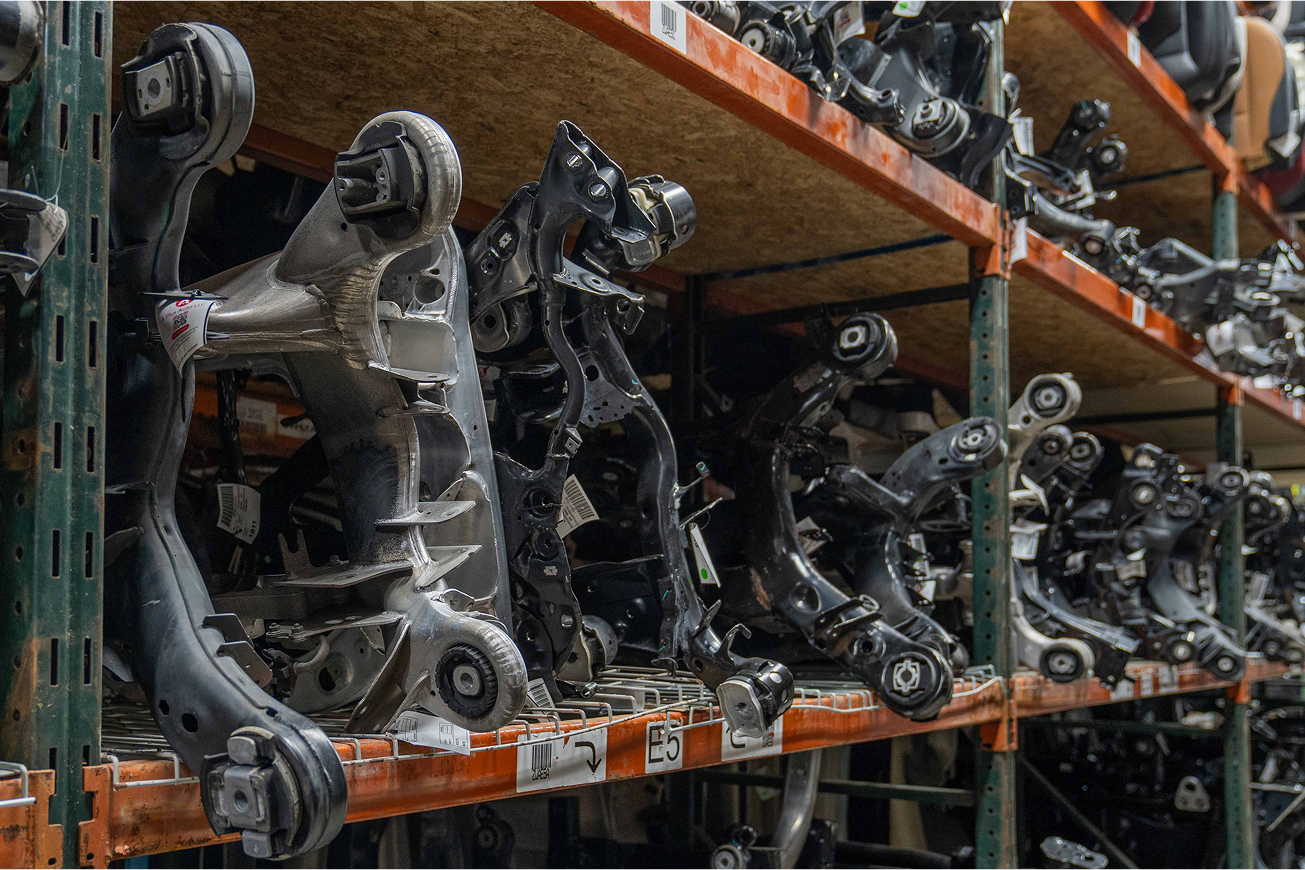
You have a worn control arm bushing and a decision to make. Press new bushings into the old arm, or bolt on a complete control arm assembly that arrives with the bushings and ball joint already installed. On paper, the loose bushings cost less, so pressing them in appears to be the economical move. In the garage, the calculation usually inverts.
Pressing bushings is skilled, exacting work that demands a hydraulic press or a dedicated bushing tool kit, precise alignment, and substantial time. A complete control arm assembly, frequently called a loaded control arm, replaces that entire ordeal with a straightforward bolt-on job. For most DIY mechanics weighing labor hours against part cost, the loaded assembly prevails on three fronts: time, hidden wear, and the one metallurgical factor that quietly destroys aluminum arms. Here is the reasoning behind each.
A complete control arm assembly is a control arm that ships with the bushings and, where applicable, the ball joint already pressed in and ready to bolt onto the vehicle. The industry calls it a loaded control arm, as opposed to a bare arm that needs components pressed into it separately.
The control arm is the hinged structural link between your chassis and the wheel’s steering knuckle, pivoting on bushings at the inboard chassis end and, on the majority of designs, articulating through a ball joint at the outboard knuckle end. Those bushings and that ball joint are the designated wear items, the components engineered to absorb vibration and permit movement and therefore the parts that eventually deteriorate. A bare arm or a loose bushing set obligates you to supply the press work yourself. A loaded assembly has already completed it, under factory-grade tooling and controlled conditions, which is the fundamental distinction that drives every advantage below.
Pressing bushings takes considerably longer than most people estimate, because the job is far more than the press stroke itself. The procedure runs through a sequence, and each step carries its own opportunity for failure:
Each stage demands patience and precision, and a single mistake sends you back to the parts counter.
Then there is the equipment itself. A proper bushing job requires a hydraulic press or a dedicated ball joint and bushing service kit with the correct adapters for your specific arm, and if you do not own one, you are renting the tooling or paying a shop for press time. A loaded control arm assembly bypasses the entire sequence. Unbolt the old arm. Bolt in the new one. Torque to specification. Done. The bolt-on procedure is measured in a fraction of the time, and it demands nothing more specialized than ordinary hand tools and a torque wrench.
For a DIY mechanic, time is the genuine currency. The few dollars saved on loose bushings evaporate the instant you factor in press rental, the risk of a botched installation, and an afternoon spent battling a seized bushing that a loaded control arm would have rendered entirely irrelevant. Factor the value of a weekend afternoon into the comparison and the loaded arm often costs less in real terms, not more.
Pressing only the bushings leaves the original ball joint in place, and that ball joint is usually just as deteriorated as the bushings you are replacing. The two components inhabit the same arm, accumulate the same mileage, and degrade on essentially the same timeline. Replace one and disregard the other, and you are frequently back under the vehicle within a year repeating the entire job.
There is a harder version of this problem. On many modern control arms, the ball joint is riveted or integrally pressed in at the factory and is not engineered to be serviced separately. You cannot simply unbolt it. That means a worn ball joint forces you to replace the entire arm regardless, so pressing fresh bushings into an arm with a deteriorating ball joint is effort invested in a component that is already on its way out the door. The sequence becomes almost comically inefficient: press new bushings now, discover the failed ball joint months later, then replace the whole arm anyway and discard the bushings you labored over.
A complete control arm assembly resolves both wear items in a single bolt-on operation, which is precisely why the loaded arm so frequently turns out to be the complete repair rather than half of one. You address the bushings and the ball joint simultaneously, under one removal, with one set of fasteners torqued once.
Aluminum control arms are where pressing bushings goes from tedious to genuinely risky, because aluminum does not tolerate the stress of pressing the way steel does. Modern vehicles use cast aluminum control arms to save weight, and aluminum is less ductile and more prone to cracking under the concentrated force a press applies. Push a stubborn bushing through an aluminum bore and you can crack the casting, distort the housing, or leave micro-fractures you will never see.
Aluminum also fatigues cumulatively in a way steel largely resists at normal suspension stress levels. Every heat cycle, every pothole impact, and every mile of flexing adds incremental metallurgical fatigue to a cast arm, and an arm that has already endured years on the road is no longer the pristine casting it originally was. Pressing new bushings into a fatigued aluminum arm concentrates fresh mechanical stress into a component that has already consumed a portion of its structural service life. A hairline crack initiated by the press can propagate into an outright failure later, and a control arm failure at speed means losing positional control of a wheel. That is not a risk worth a bushing’s price difference.
A new loaded aluminum assembly sidesteps the entire hazard. You get a fresh casting, correctly pressed bushings installed under controlled factory conditions, and none of the accumulated fatigue history of the old arm. The structural clock resets.
Pressing bushings is still the correct call in a few specific situations, and honesty about them strengthens the rest of the case. If you own a press, possess the correct adapters, and the arm is a sturdy steel unit with a serviceable or already-sound ball joint, pressing a fresh bushing into it can be perfectly legitimate and genuinely cheaper. Performance builders fitting polyurethane or spherical bushings press them into otherwise healthy arms routinely, precisely because they want to retain a specific arm while changing only its compliance characteristics.
The calculus shifts decisively toward a loaded control arm as the arm grows older, as it turns out to be aluminum, as the ball joint reveals wear, and as the value of your own time climbs steadily higher. For a daily driver with a worn bushing and an aging arm, the loaded assembly is almost always the smarter buy. For a specialist with a press and a specific reason to reuse the arm, pressing still has its place. Knowing which situation you are in is the whole decision. For the engineering background on how these components are designed and how the bushing and ball joint carry their loads, the reference material on the control arm covers the fundamentals.
The case comes down to total cost rather than part-price alone: a complete control arm assembly saves the press work, catches the ball joint before it strands you, and spares you from stressing a fatigued aluminum casting. For most repairs, that combination is worth more than the few dollars saved on bare bushings.
Browse our used suspension and control arm inventory by year, make, and model to locate the correct loaded arm for your vehicle, or send us your VIN and we’ll confirm the fit, since control arm design varies considerably by trim, drivetrain configuration, and production date. Every part is inspected, graded, and backed by a one-year warranty, so you can complete the repair once and move on rather than revisiting it after a premature ball joint failure.
If you are not confident assessing control arm or ball joint wear yourself, have a qualified technician inspect the suspension before you buy, since these components affect steering and stability directly and are worth getting right the first time.
If your car sits level all day but sags on...
Pressing new bushings into an old arm seems cheaper until...
Four sensor codes at once rarely means four bad sensors....
Some replacement modules drop right in. Others won’t work until...