A used Toyota Tacoma engine is one of two distinct powerplants, and which one you need depends entirely on your truck’s generation: the 3.5L V6 for 2016-2023 models, or the turbocharged 2.4L I-4 for 2024 and newer. Prices swing from under $1,500 for a high-mileage long block to well over $4,000 for a low-mileage complete engine with documentation, so knowing what you’re actually buying matters more than the sticker price. The two engines do not interchange, and understanding why will save you from an expensive mistake.
Which Engine Does Your Tacoma Actually Have?
Toyota redesigned the Tacoma’s engine lineup exactly once in the last decade, and the split falls cleanly along generational lines. Third-generation trucks built from 2016 through 2023 use the 2GR-FKS, a 3.5-liter, 60-degree V6 with dual overhead cams, an aluminum block and heads, and a dual injection system that combines port and direct fuel delivery. It’s rated at 278 horsepower and 265 lb-ft of torque, runs an Atkinson cycle for efficiency, and drives its camshafts with a timing chain rather than a belt. Toyota used the same 2GR-FKS architecture in other vehicles, including the Highlander, Sienna, and several Lexus models, according to a Cars.com engineering breakdown of the engine.
The fourth-generation Tacoma, launched for the 2024 model year, dropped the V6 entirely in favor of the T24A-FTS, a turbocharged 2.4-liter inline-four built on Toyota’s newer i-FORCE platform. It makes the same 278 horsepower as the outgoing V6 but adds a meaningful torque bump to 317 lb-ft, thanks to a twin-scroll turbocharger and the same D-4S dual-injection strategy. The block is aluminum with an open-deck design and cast iron cylinder liners. Buyers researching a used Tacoma engine need to identify the model year first; everything else about compatibility, pricing, and sourcing flows from that one fact.
What Actually Drives Used Tacoma Engine Cost?
Three variables do most of the work in setting price, and they interact with each other in ways that aren’t always obvious to a first-time buyer.
Mileage sets the ceiling. A 2GR-FKS pulled from a truck with 55,000 miles will list for considerably more than one out of a 175,000-mile donor, even though both may run fine; buyers are paying for remaining service life, not just current function. Completeness sets the floor. A bare long block, meaning the short block plus cylinder head, camshafts, valvetrain, and a new head gasket, costs less than a complete engine that arrives with the intake manifold, exhaust manifold, alternator, and accessory brackets already attached. Swapping a long block into an existing engine bay takes more labor and more parts sourcing, so the lower purchase price often gets offset at the shop.
Documentation is the variable buyers underweight. An engine sold with a compression test printout, verified mileage from the donor vehicle’s title or service records, and a clear description of why the donor truck was scrapped will command a premium over an undocumented unit, and it should. A seller quoting 80,000 miles with no paperwork is a bigger gamble than one quoting 130,000 miles backed by records, because the low number with no proof could be fabricated.
What Should You Verify Before You Buy a Used Engine?
Walk through this list with any seller before money changes hands. Reputable used parts dealers will have answers ready; vague or evasive responses on more than one item are a reason to keep looking.
- Compression test results. Ask for numbers from all cylinders, not just a statement that it “runs great.” Variance of more than 10 percent between cylinders on a healthy V6 or I-4 suggests wear worth investigating further.
- Oil change and maintenance history. Records from the donor vehicle, even partial ones, tell you whether the engine was maintained on schedule or run hard between changes.
- Timing chain and tensioner condition. Both Tacoma engines use chains rather than belts, but chains stretch and tensioners wear. Ask whether the timing components were inspected and whether there’s any documented rattle history.
- Reason the donor vehicle was retired. A truck totaled in a collision with an untouched engine bay is a very different story than one pulled after a transmission failure that may have stressed the drivetrain, or a truck retired for an unrelated engine problem.
- Included ancillary parts. Confirm exactly what ships with the engine: wiring harness, ECU, intake manifold, exhaust manifold, turbocharger (on 4th-gen units), sensors, and accessory brackets. Missing a single sensor or harness connector can turn a straightforward swap into a parts-chasing project.
- Fitment against your exact trim and transmission. Manual and automatic Tacomas use different flywheel and bellhousing configurations even within the same engine family, so match the transmission type, not just the model year.
Can You Swap a 3rd-Gen Engine Into a 4th-Gen Tacoma?
No, and the incompatibility runs deeper than bolt patterns. The 2GR-FKS and T24A-FTS are built on entirely different platforms with different engine management systems, different wiring architectures, and different mounting geometry. Toyota redesigned the Tacoma’s chassis for the fourth generation, moving to the TNGA-F platform shared with the Tundra and Land Cruiser, and the engine bay, electronics, and drivetrain integration changed along with it. A V6 from a 2019 Tacoma has no ECU compatibility with a 2024 truck’s wiring harness, and the physical dimensions of an inline-four versus a V6 rule out a direct swap without extensive fabrication.
This isn’t a case of manufacturers being difficult for no reason. The turbocharged four-cylinder relies on different sensor feedback, a different fuel delivery calibration, and integration with the newer truck’s electronic stability and transmission control modules. Forcing an older V6 into a newer chassis, or vice versa, means replacing far more than the engine itself, which is why reputable sellers will always ask for your VIN or exact model year before quoting a price.
Where to Find One
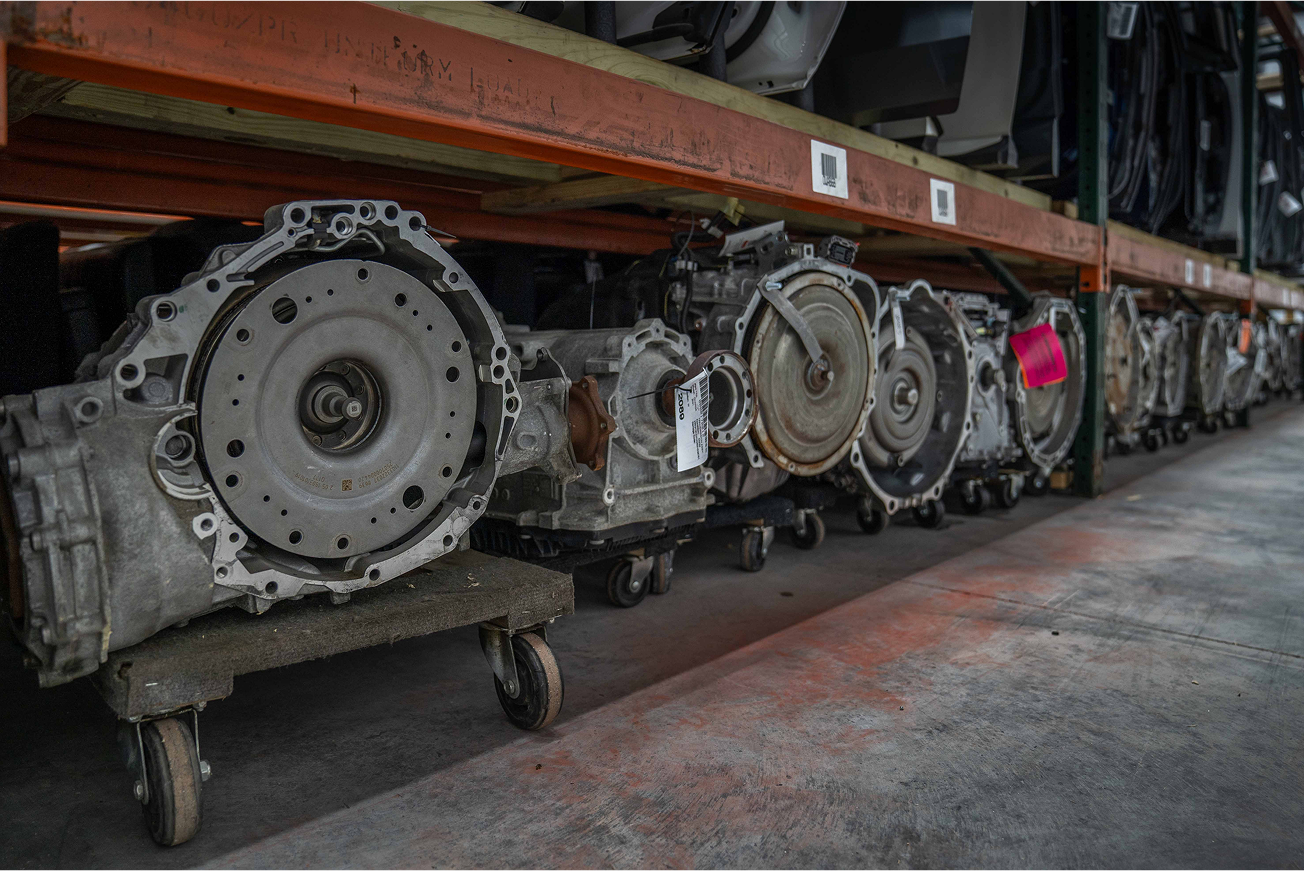
Used Tacoma engines turn up through salvage yards, specialty importers, and parts dealers that pull them from damaged or high-mileage donor trucks. A Plus Auto, a used auto parts dealer in Nicholasville, Kentucky, keeps both the 3.5L V6 and the newer turbo I-4 in stock, which is worth knowing if you’re trying to compare options for either generation in one place; their used parts inventory is searchable by vehicle year and model.
The Bottom Line
Matching the right engine to your Tacoma starts with confirming your model year, since the 3.5L V6 and the turbo 2.4L I-4 are not interchangeable and never will be. Beyond that, the smartest money goes toward documentation: a compression test, real mileage records, and a clear account of the donor vehicle will tell you more about long-term reliability than any price tag alone.