GM’s 5.3-liter V8 has powered the bulk of Chevrolet, GMC, and Cadillac’s half-ton trucks and SUVs since the late 1990s, through three distinct engine families: Vortec, Gen IV, and today’s EcoTec3. It’s a reliable engine by reputation, but two specific weak points, lifter failure tied to cylinder deactivation and torque converter shudder in the transmissions bolted behind it, have generated real complaint volume and, in one adjacent case, an actual federal safety recall. Here’s what’s true, what’s overstated, and what’s a different engine entirely.
Which Chevy, GMC, and Cadillac models have the 5.3L V8?
The 5.3L has been the volume engine across GM’s full-size truck and SUV lineup for over two decades, which is exactly why any problem with it shows up across so many nameplates at once.
- Chevrolet Silverado 1500 (1999-present): the default V8 option across most trim levels.
- GMC Sierra 1500 (1999-present): mechanically identical to the Silverado’s version, badged differently.
- Chevrolet Tahoe and Suburban (2000-present): standard or available V8 depending on model year and trim.
- GMC Yukon and Yukon XL (2000-present): shares the same engine family as the Tahoe/Suburban.
- Cadillac Escalade (2002-present, through the current generation): the 5.3L has been a lower-tier option in some years, with the 6.2L reserved for higher trims.
- Chevrolet Express and GMC Savana vans: commercial and passenger van applications also use 5.3L variants.
The specific engine code matters more than the “5.3L” badge alone, because GM has revised this engine substantially without changing the displacement. The current-generation engine is either the L83 (2014-2018, Active Fuel Management) or the L84 (2019-present, Dynamic Fuel Management). They share a displacement and a similar power rating, roughly 355 horsepower and 383 lb-ft of torque, but GM treats them as distinct engines with different valley covers, water pump locations, oil pans, and ECU calibration. Parts are not universally interchangeable between them.
Why do so many owners report lifter failure on the 5.3L?
The core of the complaint centers on cylinder deactivation, a fuel-saving feature that shuts down half the engine’s cylinders under light load. GM has used two versions of it on the 5.3L: Active Fuel Management (AFM) on Generation IV engines from roughly 2007 through 2018, and Dynamic Fuel Management (DFM) on Generation V EcoTec3 engines from 2019 onward. DFM is more aggressive than AFM, cycling through 17 different deactivation patterns instead of switching between just two states (all cylinders on or half off).
Both systems work by using a special lifter that can collapse to hold a valve closed when a cylinder deactivates. When that lifter’s internal parts wear out or the oil control valve controlling it fails, the lifter can collapse permanently, or a roller can separate from the lifter body and drop into the oil pan, sometimes taking a camshaft lobe with it. Owners report this as a sudden loud tick, a check-engine light with a misfire code, and in worse cases a full engine failure requiring a rebuild.
A few things are worth being precise about here, because online discussion tends to blur them together:
- This is documented most heavily in trucks with build dates in the September 2020 to March 2021 window, though complaints span a wider range of model years on both AFM and DFM systems.
- It has generated class-action lawsuits and extended-warranty pressure on GM, and GM has quietly dropped DFM from 2026 production engines according to internal documentation, but as of this writing it has not triggered a formal NHTSA safety recall the way the 6.2L issue below did.
- Aftermarket AFM/DFM “disabler” devices exist to prevent the cylinder deactivation cycling that’s blamed for lifter wear, but they don’t repair a lifter that’s already damaged, and they don’t address the mechanical root cause some technicians point to in the lifter design itself.
Has the 5.3L actually been recalled?
This is the part that gets confused most often, so it’s worth separating clearly. In April 2025, GM issued NHTSA recall 25V-274 covering roughly 600,000 U.S. vehicles for connecting-rod and crankshaft manufacturing defects that could cause sudden engine seizure and loss of propulsion. That recall covers 2021-2024 Chevrolet Silverado 1500, Tahoe, and Suburban, GMC Sierra 1500, Yukon, and Yukon XL, and Cadillac Escalade and Escalade ESV models, but only those equipped with the 6.2L L87 V8, not the 5.3L. Vehicles with the 5.3L L84 are explicitly excluded from that recall.
The remedy for affected 6.2L trucks involves a dealer inspection; vehicles that pass get a higher-viscosity oil fill, a new oil cap, and a new filter, while ones that show damage get the engine repaired or replaced outright. As of early 2026, NHTSA opened a follow-up query, RQ26001, after dozens of owners reported engine failures even after the recall repair was completed, so this remains an open situation for L87 owners.
For 5.3L owners specifically, there is a 2017 technical service bulletin addressing fuel injector oil ring seals related to fuel odor and hard-starting complaints on L83 engines, but that’s a service bulletin, not a safety recall, and it’s unrelated to the lifter or connecting-rod issues discussed above.
What about the transmission behind the 5.3L?
The 5.3L in 2015-2020 trucks and SUVs is commonly paired with GM’s 8L90 eight-speed automatic (and the lighter-duty 8L45 in some applications), and that transmission has its own well-documented problem: torque converter clutch shudder, nicknamed the “Chevy shake” by owners. It shows up as a vibration felt between roughly 25 and 80 mph during light throttle or steady cruising, and it’s separate from anything happening inside the engine itself.
GM traced this largely to the original factory fluid, Dexron HP, which is hygroscopic and absorbs moisture through the transmission’s vent system over time, degrading the torque converter clutch’s ability to lock up smoothly. GM addressed it through technical service bulletins 18-NA-355 and 19-NA-219, which call for a flush and refill with updated Dexron HP fluid and, in some cases, a torque converter replacement if the shudder persists after the fluid service. It’s a repair most independent transmission shops are familiar with by now, and it doesn’t require touching the engine.
The bottom line
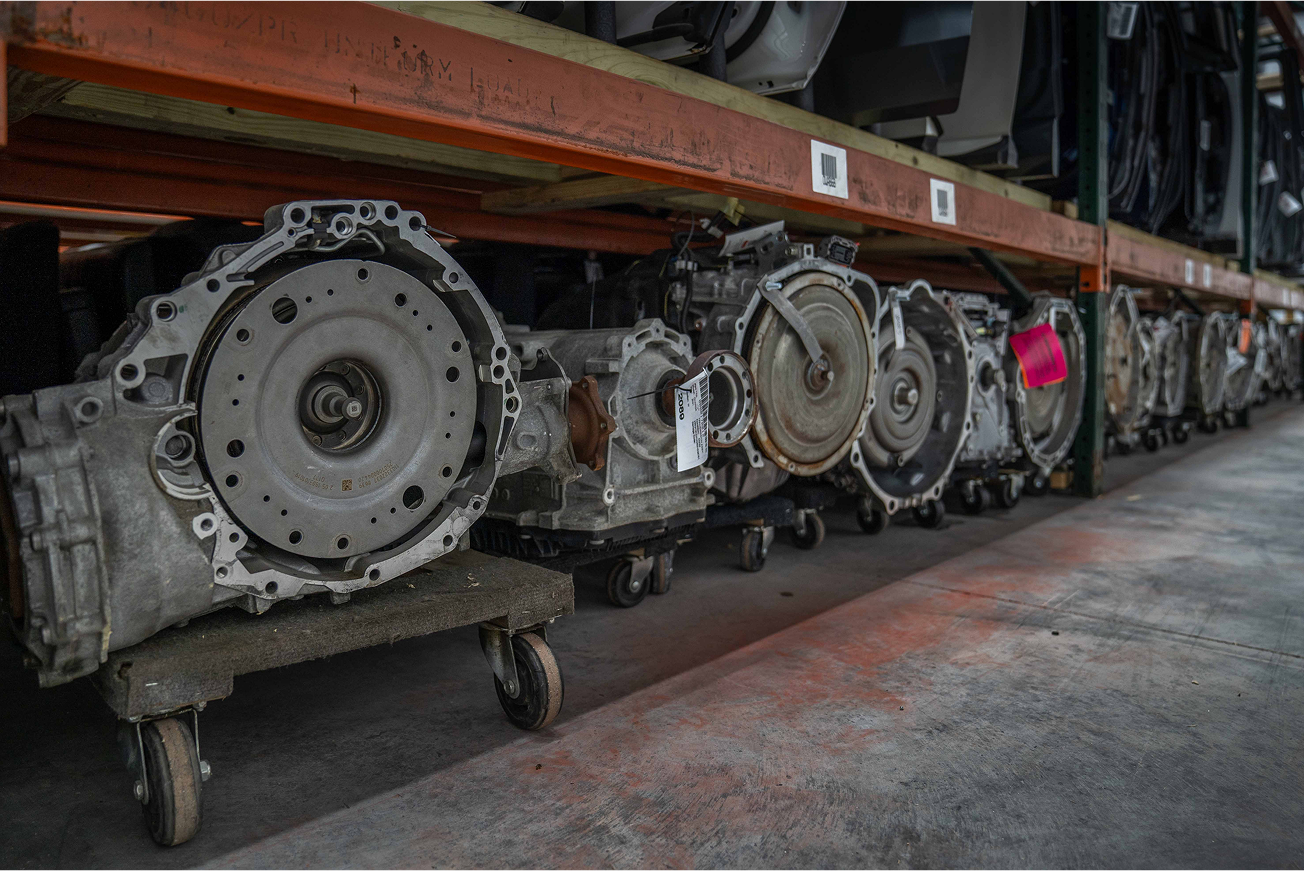
The 5.3L V8 has powered most of GM’s trucks and SUVs for more than two decades, and its two real weak points are cylinder-deactivation lifter failure in Gen IV and Gen V engines and torque converter shudder in the 8-speed automatics paired with later trucks. Neither of those has produced a federal safety recall on the 5.3L itself. The recall that does exist, 25V-274, is specific to the 6.2L L87 engine and its connecting rod and crankshaft defects, and it does not apply to 5.3L-equipped vehicles. Knowing your engine code, L83 versus L84 versus an older Gen IV code, matters more than the “5.3L” badge when you’re trying to figure out which problems actually apply to your truck. If you’re weighing a used 5.3L or its accompanying 8-speed transmission for a rebuild, A Plus Auto in Nicholasville, Kentucky is one place that stocks pulled units.
Sources: